You'll apply the same movement skills you learned in the hospital or rehab center to your exercise program at home. You may also keep meeting with your physical therapist. Following your exercise program brings big rewards. With your knee in shape, you'll walk more easily and get back to an active life sooner.
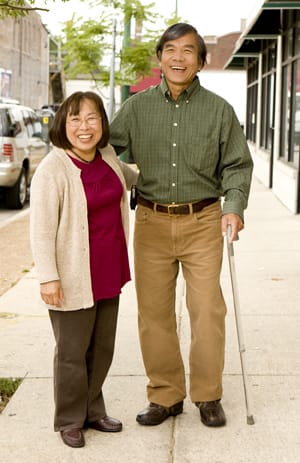
Maintaining your exercise program
Exercising is the only way to get back your strength and range of motion. With continued exercise, you may gain even more strength and range of motion than you had before surgery. That's because before surgery, pain and stiffness may have limited your movement. So make exercise part of your daily routine. Keep meeting with your physical therapist as directed. They may add riding a stationary bike, swimming, or other new exercises to your program.
Walking in stride
Walking helps build a more normal, comfortable stride. It also keeps you in shape and helps prevent blood clots. Start by taking one or more short walks every day. Over time, increase how far, how long, and how many times a day you walk. After your walk, lie down, elevate your knee, and ice it to ease swelling. Your doctor or physical therapist will tell you when and where to use your walker, crutches, or cane. They will also let you know when you can stop using them.
Online Medical Reviewer: Rahul Banerjee MD
Online Medical Reviewer: Raymond Turley Jr PA-C
Online Medical Reviewer: Stacey Wojcik MBA BSN RN
Date Last Reviewed: 09/01/2025
© 2000-2026 The StayWell Company, LLC. All rights reserved. This information is not intended as a substitute for professional medical care. Always follow your healthcare professional's instructions.